Body
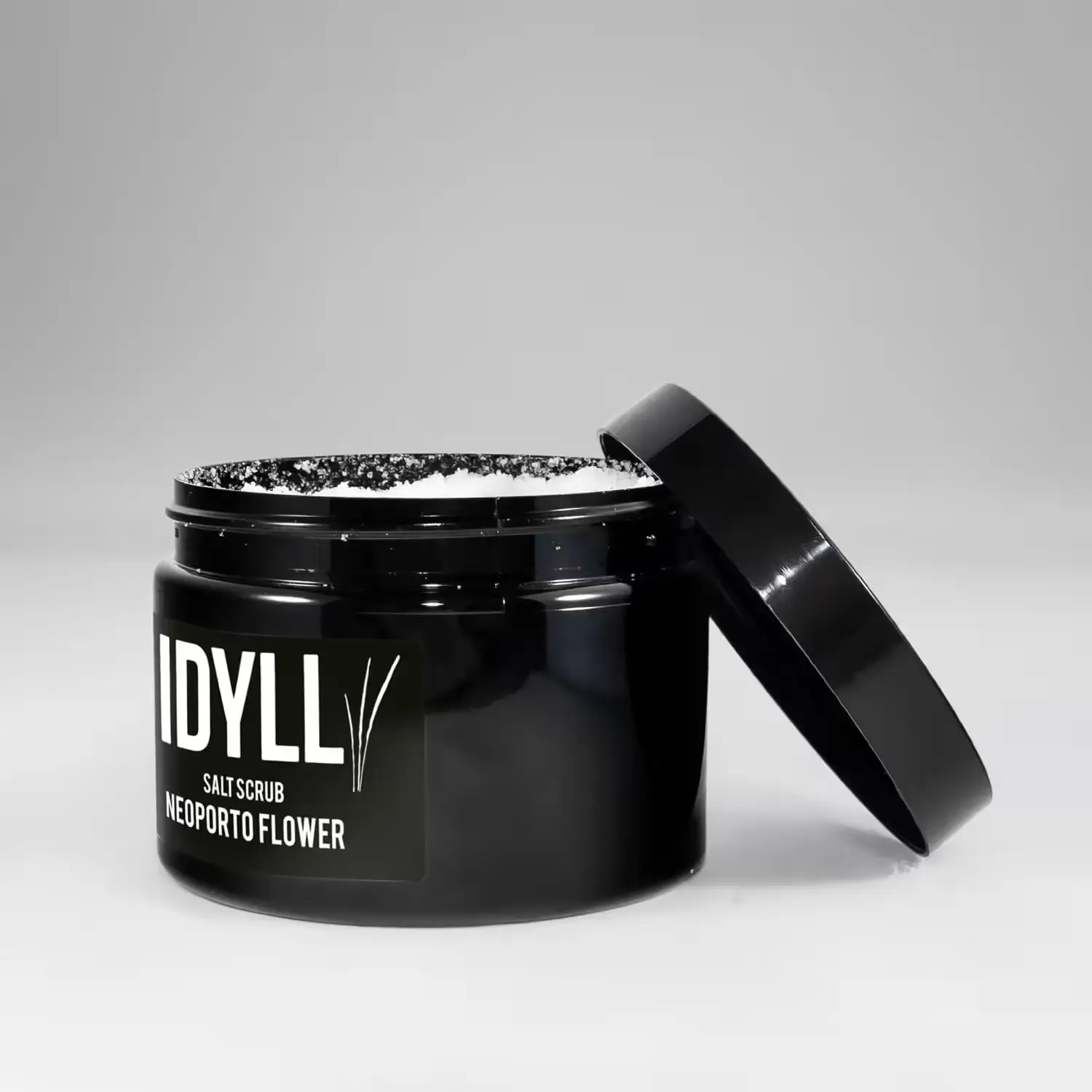
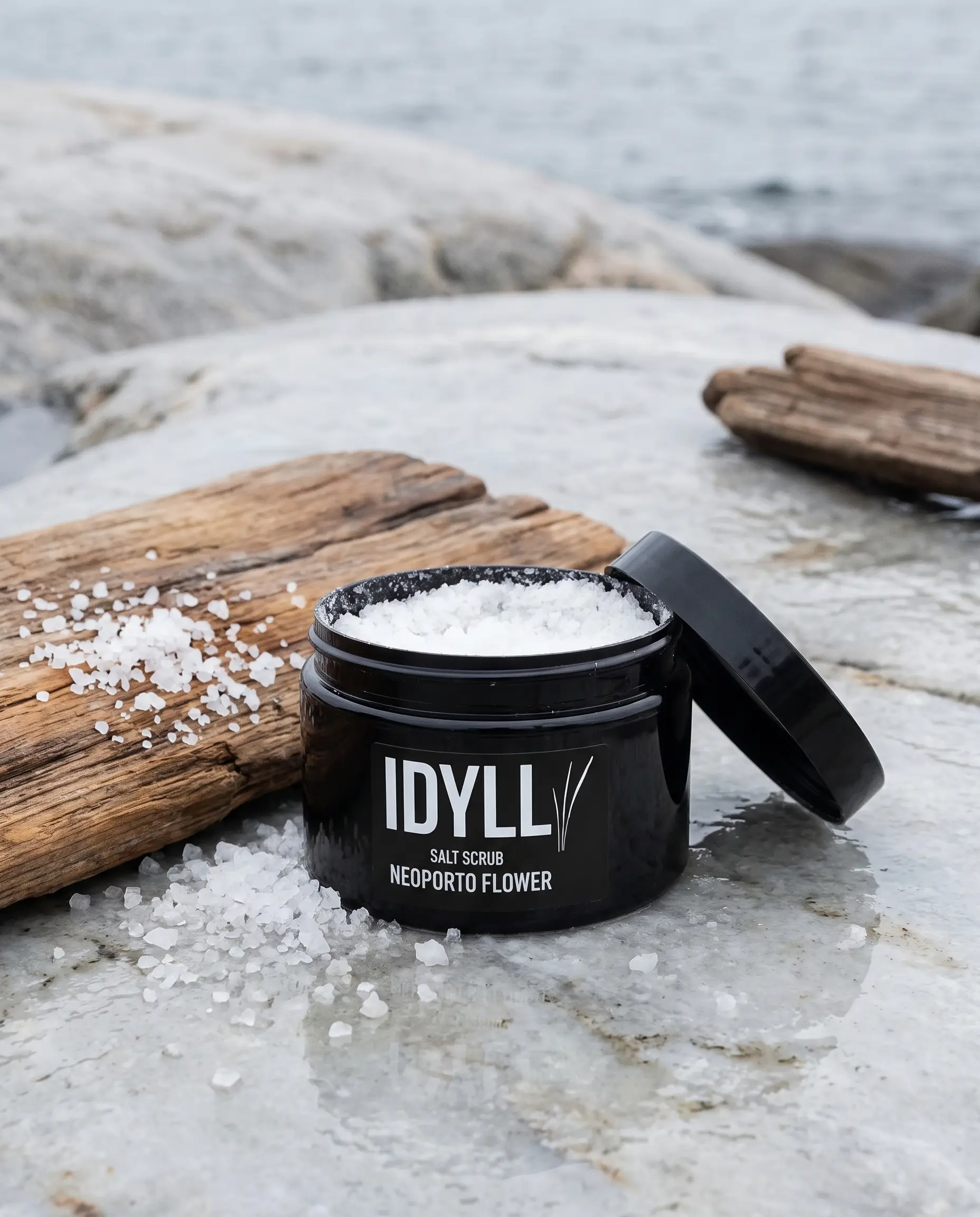
Salt Scrub
3 fragrances
20 reviewsA sea salt body scrub that cleanses and remineralises the skin.
325 kr
Choose fragranceSalt is harder, more angular and does not dissolve in oil. Sugar is rounder and breaks down while you work with it. One is stronger, the other milder — and most bodies have areas that want both.
Updated 9 September 2026
| Salt scrub | Sugar scrub | |
|---|---|---|
| Crystals | Hard, angular | Rounder, softer |
| While you use it | Keeps its shape | Dissolves gradually |
| Feel | Stronger, more abrasive | Milder |
| Suits | Feet, heels, elbows, knees, back | Thin skin, delicate areas, frequent use |
| After shaving | Wait | Wait, but less long |
A salt crystal has edges and keeps them for the whole of the job. It does not dissolve in the oil it sits in, and it does not dissolve in the small amount of water on damp skin during the seconds you work with it either. The crystal you start with is more or less the crystal you finish with.
Sugar crystals are rounder to begin with and break down as you massage. A sugar scrub is therefore coarser at the start than at the end, and milder overall.
That is the whole of the difference. Everything else — how it feels, where it suits, how often you can use it — follows from that.
Salt is right where skin is thick and can take something: feet, heels, elbows, knees, lower legs, back. It is also where the difference shows fastest.
Sugar makes more sense where skin is thin or easily irritated — inner thighs, chest, neck — and for anyone who wants to scrub more often than a couple of times a week.
Plenty of bodies want both, and there is nothing odd about that: you don’t have to treat the whole of yourself with the same product on the same day.
Both salt and sugar scrubs are carried by an oil, and that oil matters at least as much as the crystals. It holds them together, it makes them spreadable, and it is what remains once the rest has been rinsed off.
Our salt scrub sits in sunflower and rapeseed oil with vitamin E, and the jar says so in plain text:
Sodium chloride, Helianthus annuus (Sunflower) seed oil, Brassica campestris (Rape), Parfum (Fragrance), Tocopherol, Limonene, Linalool.
It is worth checking whichever kind you choose. A scrub whose first ingredient after the crystals is water is a different sort of product from one carried by oil — not worse, but it leaves less behind and needs something after it.
Salt does not dissolve in oil, so a salt scrub separates rather than changes: the oil settles on top and the salt below. Stir it, and it is as it was.
Salt and sugar are both difficult environments for micro-organisms in themselves, but that holds only while the product stays dry. Water in the jar changes it, which is why the scrub is portioned with a wooden spoon rather than a wet hand.
If you are unsure and want only one: salt, with a lighter hand on the thin areas. It is the one that makes a visible difference on heels and elbows, and it does more per session — which means fewer sessions.
If you want to scrub more often than twice a week, or your skin is irritated by most things, sugar is the more sensible choice.
If you already have a salt scrub and find it harsh, don’t change product first. Try lighter pressure, less time per area and damper skin. That fixes it more often than a change of product does — the full routine is on how to use a salt scrub.
Read next
Body
A sea salt body scrub that cleanses and remineralises the skin.
Sign up and hear about new fragrances and sets first.
New fragrances and offers by email. Unsubscribe in one click.