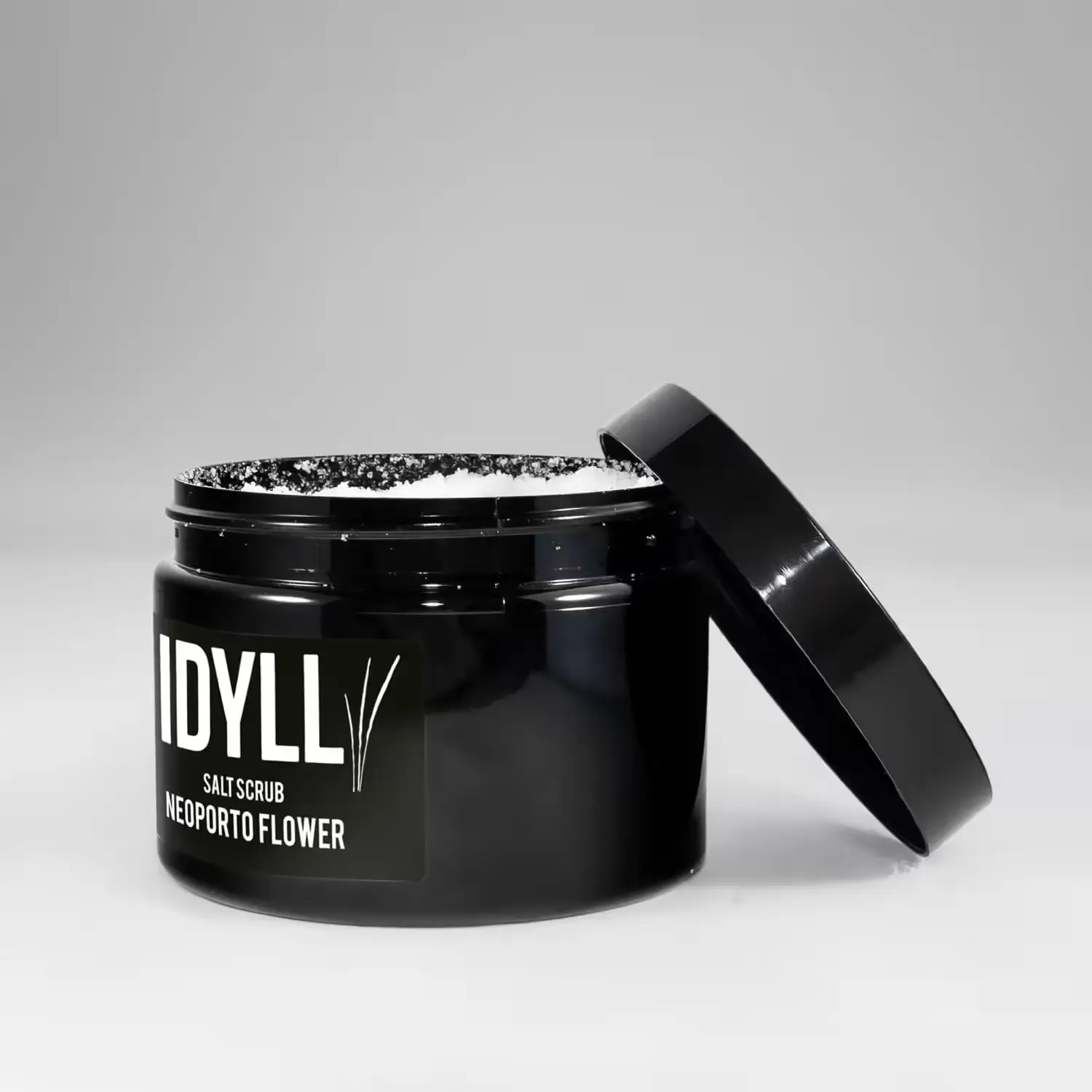
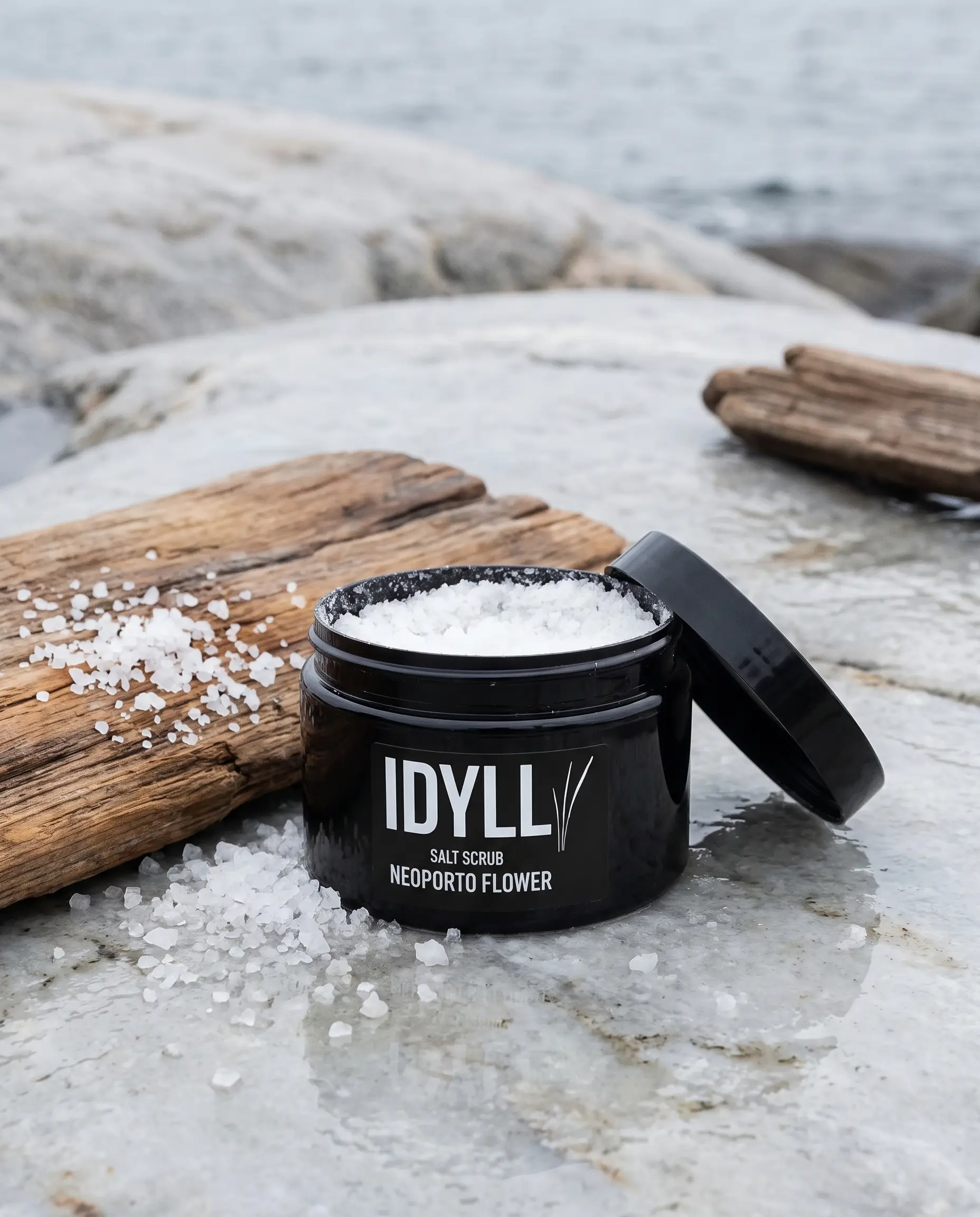
Body
Salt Scrub
3 fragrances
20 reviewsA sea salt body scrub that cleanses and remineralises the skin.
325 kr
Choose fragranceA salt scrub is sea salt in oil. The crystals lift away loose, dry skin as you work them across it, and the oil stays behind once the salt is rinsed off. The rest of this page is the detail.
Updated 9 September 2026
Two things in a jar: a salt and an oil. The salt is mechanical — the crystals have edges, and when you work them across the skin, loose surface skin comes with them. The oil is the carrier. It holds the crystals together so they can be spread, and it is what remains once the salt has been rinsed away.
That is the whole product. A salt scrub sold as something more elaborate than that is usually the same two things with more words around them.
Ours sits in sunflower and rapeseed oil, with sea salt as the only abrasive. The list on the jar is short enough to read in full:
Sodium chloride, Helianthus annuus (Sunflower) seed oil, Brassica campestris (Rape), Parfum (Fragrance), Tocopherol, Limonene, Linalool.
Sodium chloride is the salt. Helianthus annuus is sunflower, Brassica campestris
rapeseed. Tocopherol is vitamin E. Parfum is the fragrance, and the names at the end are
fragrance components that have to be declared separately above a certain amount — which is
why the list ends the way it does. Those differ between the scents; everything else on the
list is the same.
Salt crystals are harder and more angular than sugar, and they do not dissolve in oil the way sugar does. That makes a salt scrub the stronger of the two. Sugar is rounder, milder, and breaks down while you work with it.
Which one is right depends on where on the body you are and how often you scrub. Feet, elbows and knees take salt every time. The inside of the thighs, the chest, and anything you have just shaved do not. We have written a separate page on the difference: salt scrub or sugar scrub.
The short version is on the jar: massage into damp skin in the shower, before soap. Rinse and pat dry.
Four things make the difference in practice:
The full routine, step by step and with the common mistakes, is on how to use a salt scrub in the shower.
Once or twice a week for most people. More often on feet and elbows, less on delicate areas. More on what decides it — the state of your skin, the season, how hard you tend to press — on how often to use a salt scrub.
The sign that it has become too often is not redness right after the shower, which is common and brief. It is skin that still feels tight the next day.
The scrub sits in oil, and oil and water do not get along. Every wet hand dipped into the jar carries water back down into it, and water in an unpreserved oil-based product is the one thing that genuinely shortens its life.
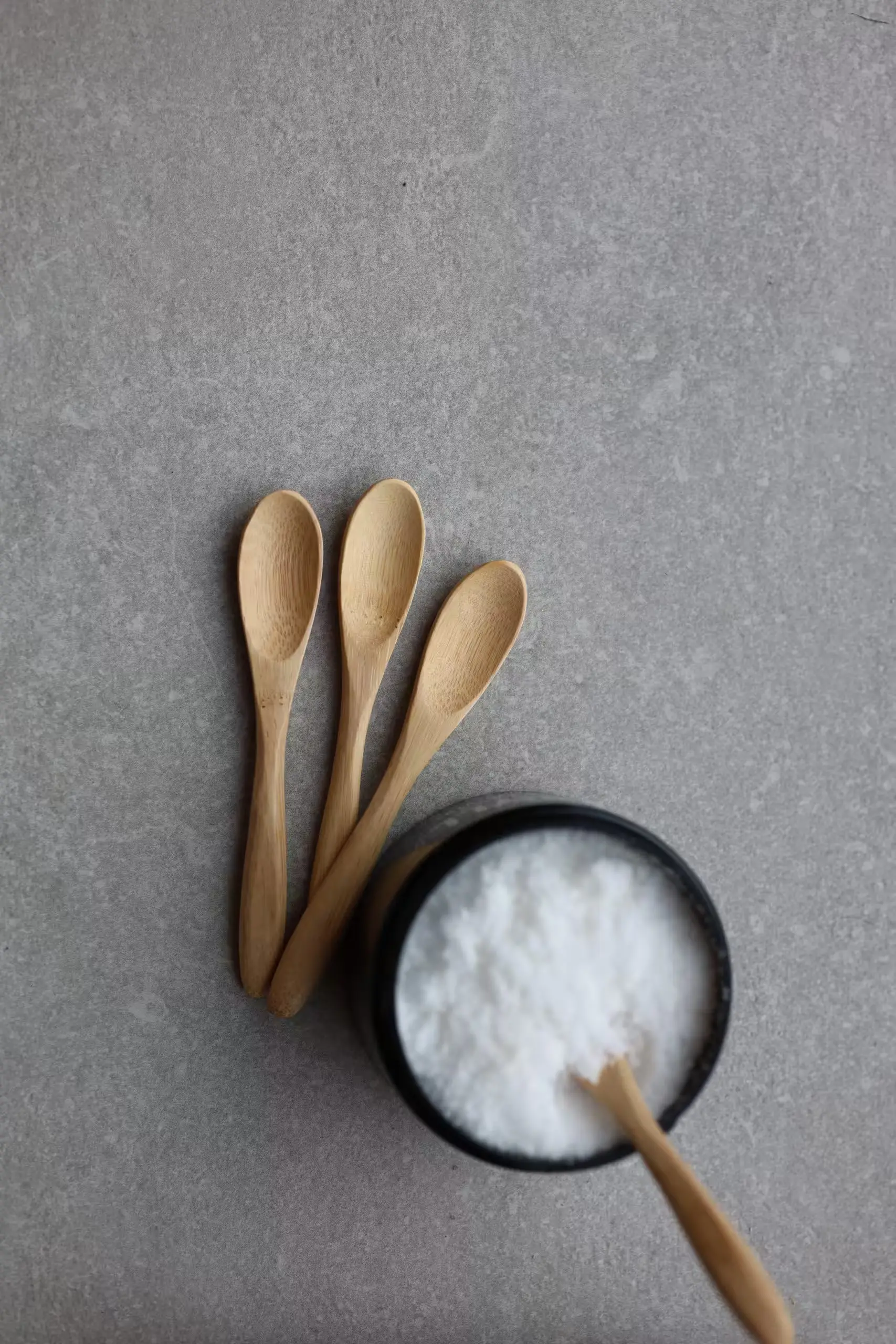
That is the entire reason a wooden spoon exists. Portion out what you need, leave the jar outside the shower, and rinse the spoon afterwards.
Our salt scrub comes in three scents, and the scent is the only difference between them — same salt, same oils, same base.
To read about the notes on their own there are pages for jasmine, lavender and citrus.
Skin is warm and damp straight out of the shower, and that is when an oil or a lotion is easiest to spread. Body oil goes on while the skin is still warm; body lotion sinks in faster and leaves no film. Which you choose is a question of how you want your skin to feel, not of which is better.
Read next
Body
A sea salt body scrub that cleanses and remineralises the skin.
Accessories
A wooden spoon for the salt scrub. Keeps your hands out of the jar and the salt dry.
Sign up and hear about new fragrances and sets first.
New fragrances and offers by email. Unsubscribe in one click.