Body
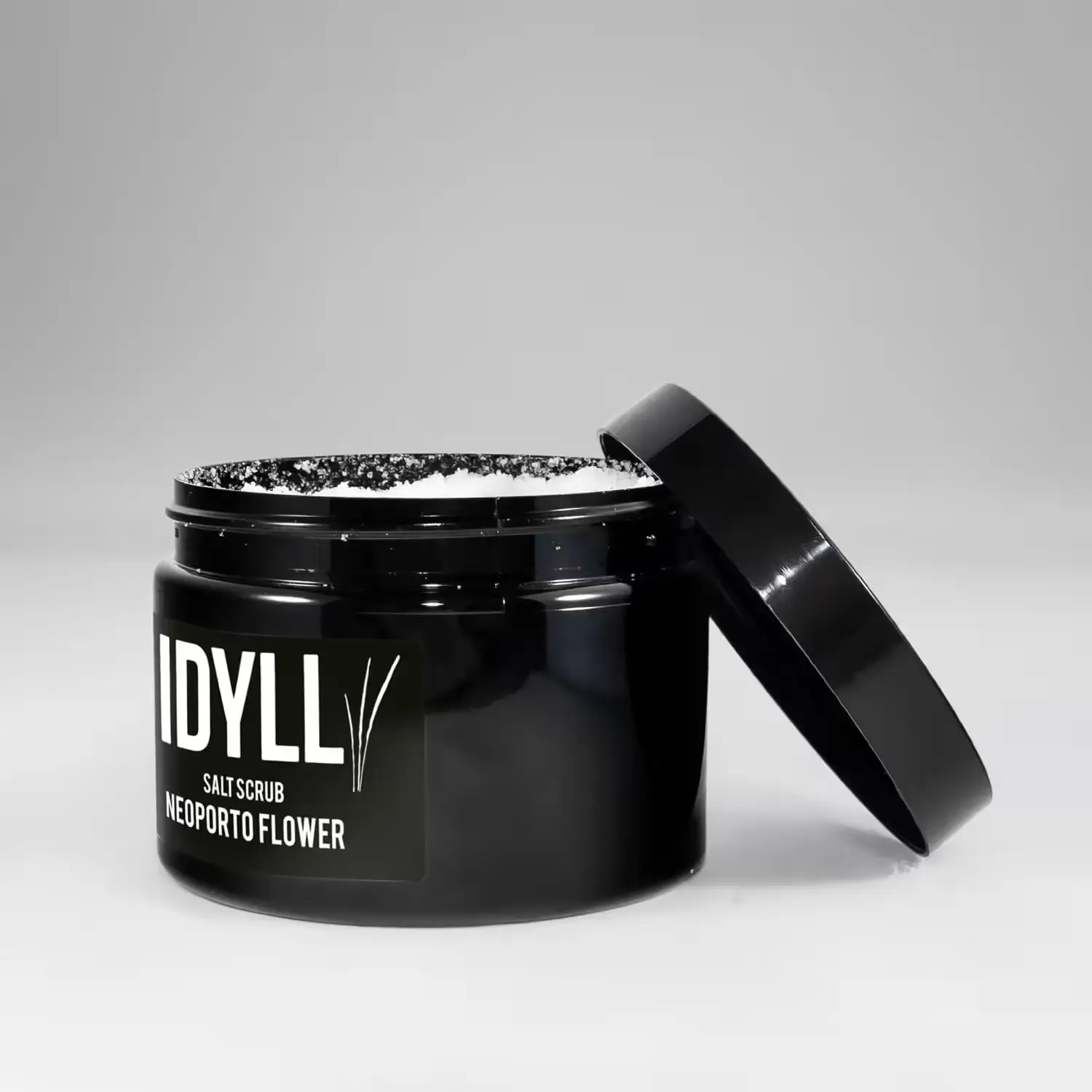
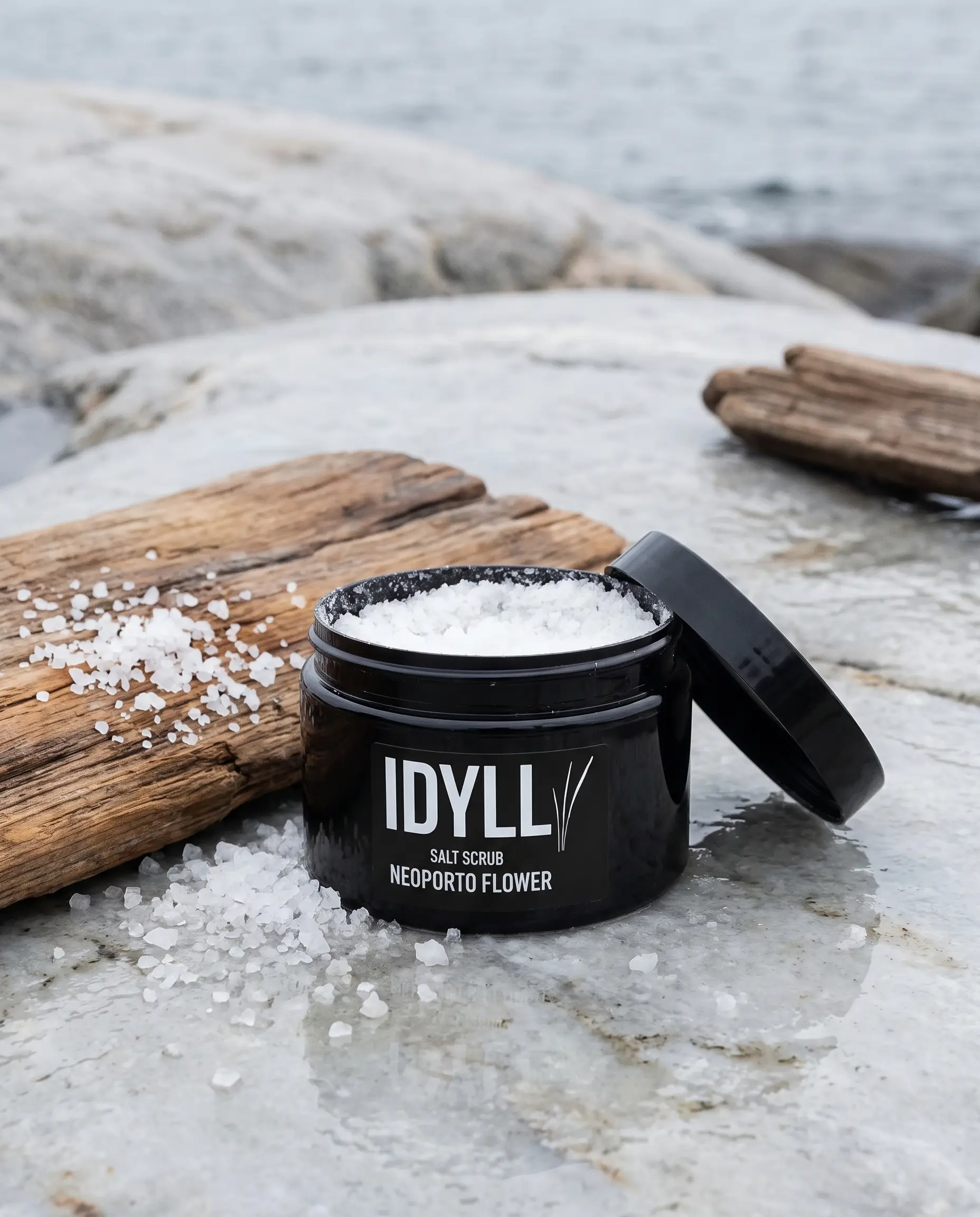
Salt Scrub
3 fragrances
20 reviewsA sea salt body scrub that cleanses and remineralises the skin.
325 kr
Choose fragranceTwo parts salt to one part oil. That is the whole recipe. What separates a homemade scrub from a manufactured one isn't the ingredients — it is crystal size, hygiene, and how long it keeps.
Updated 9 September 2026
Mix salt and oil in a bowl until all the salt is wetted. The consistency should be like wet sand, not like soup: if you can form a clump that holds together, it is right. Too loose, add salt. Too dry, add oil a teaspoon at a time.
Transfer to a jar with a tight lid. Stir before use — oil and salt separate, and they are meant to.
Ordinary sea salt works. What to look at is the crystal size, not the name on the packet.
Getting the crystal size right is the single hardest part, and it is also the only difference you actually feel. More on why is on sea salt in skincare.
A neutral, thin oil spreads best: sunflower, rapeseed, sweet almond. Coconut oil sets below 24 °C, which makes the jar hard in winter and runny in summer. Olive oil works but has a scent of its own that takes over anything else you put in.
Oils go rancid over time. A jar that smells sour or of cardboard is finished, however much is left in it.
Essential oils are not dosed by “a few drops until it smells nice”. They have recommended maximum levels for use on skin, and those vary a great deal between oils — citrus oils are one group that needs more thought than most.
If you want to scent it: start low, test on a small area of skin first, and skip it entirely on skin that is sensitive or freshly shaved. This is the part of home-making that is hardest to do responsibly, and there is no shortcut around it.
A mixture of salt and oil is a difficult environment for micro-organisms — as long as it stays dry. The moment water gets into the jar that no longer holds, and a homemade scrub has no preservative to catch it.
So:
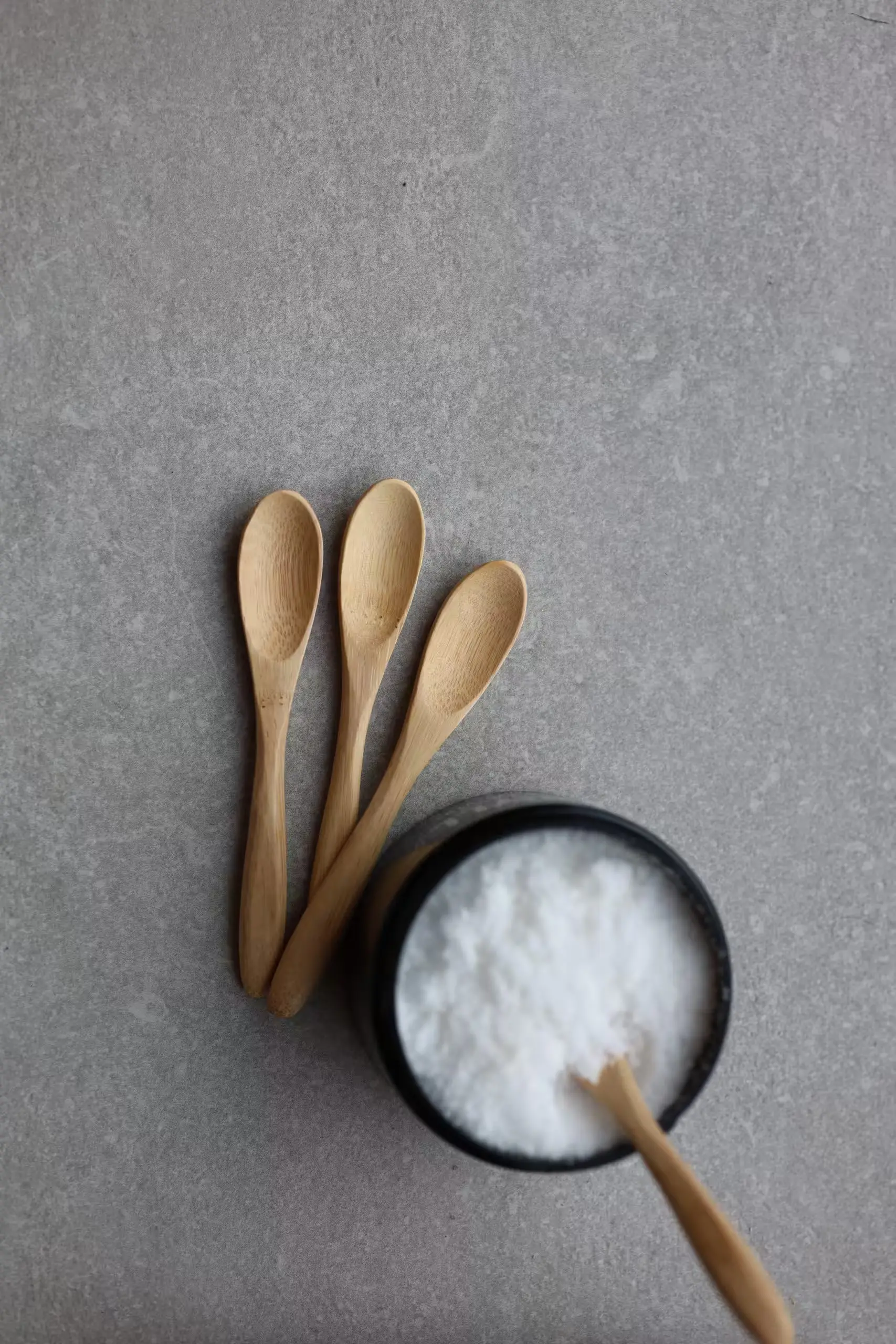
The same rule applies to a manufactured scrub, which is why a wooden spoon comes with our sets.
Honestly: the same two ingredients. The difference is in what is hard to do at a kitchen counter — consistent crystal size in every jar, a fragrance dosed for skin rather than for a nose, and a product labelled with what is in it.
Our salt scrub is sea salt in sunflower and rapeseed oil with vitamin E, 400 g, and the ingredient list is printed in full on the jar. If you just want smooth heels on a Sunday, the recipe above is entirely enough.
Read next
Body
A sea salt body scrub that cleanses and remineralises the skin.
Accessories
A wooden spoon for the salt scrub. Keeps your hands out of the jar and the salt dry.
Sign up and hear about new fragrances and sets first.
New fragrances and offers by email. Unsubscribe in one click.