Body
Salt Scrub
3 fragrances
20 reviewsA sea salt body scrub that cleanses and remineralises the skin.
325 kr
Choose fragranceThe order is the amount. Whatever comes first there is most of, and the first three lines tell you almost everything about what a scrub is. The rest of this page is how to read them.
Updated 9 September 2026
Ingredients are listed in descending order of quantity down to one per cent. Whatever comes first there is most of. Below one per cent they may appear in any order, which is why the end of a list rarely says anything about how much of something is in there.
The names are INCI, a shared system that means the same raw material is called the same thing across the EU. The Latin isn’t marketing — it’s the requirement.
1. What does the scrubbing, and that it comes first. In a salt scrub, Sodium chloride
should be at the top. In a sugar scrub, Sucrose. If the crystals appear further down, the
product is mostly something else.
2. What carries the crystals. Lines two and three are usually the carrier. An oil —
Helianthus annuus seed oil (sunflower), Cocos nucifera oil (coconut), Prunus amygdalus dulcis oil (sweet almond) — means something stays on the skin. Aqua means the carrier is
water, which is a different sort of product: it rinses away more completely and needs
something after it.
3. Whether there is a preservative, and why. A product containing water has to be
preserved — Phenoxyethanol, Sodium benzoate, Benzyl alcohol are common. A plain
salt-in-oil product does not, as long as no water gets into it. The absence of a preservative
is not a better grade, then; it is a different recipe, and it asks something of you: keep the
jar dry.
4. Where the fragrance sits. Parfum is the fragrance, and the components that have to be
declared separately follow it: Limonene, Linalool, Citral, Geraniol, Hexyl cinnamaldehyde. They are not added individually — they occur in the fragrance and must be
written out above a certain level. A list that is long at that end is usually just an honest
one.
5. Whether vitamin E is there. Tocopherol is vitamin E. In an oil-based product it is
usually there as part of the oils.
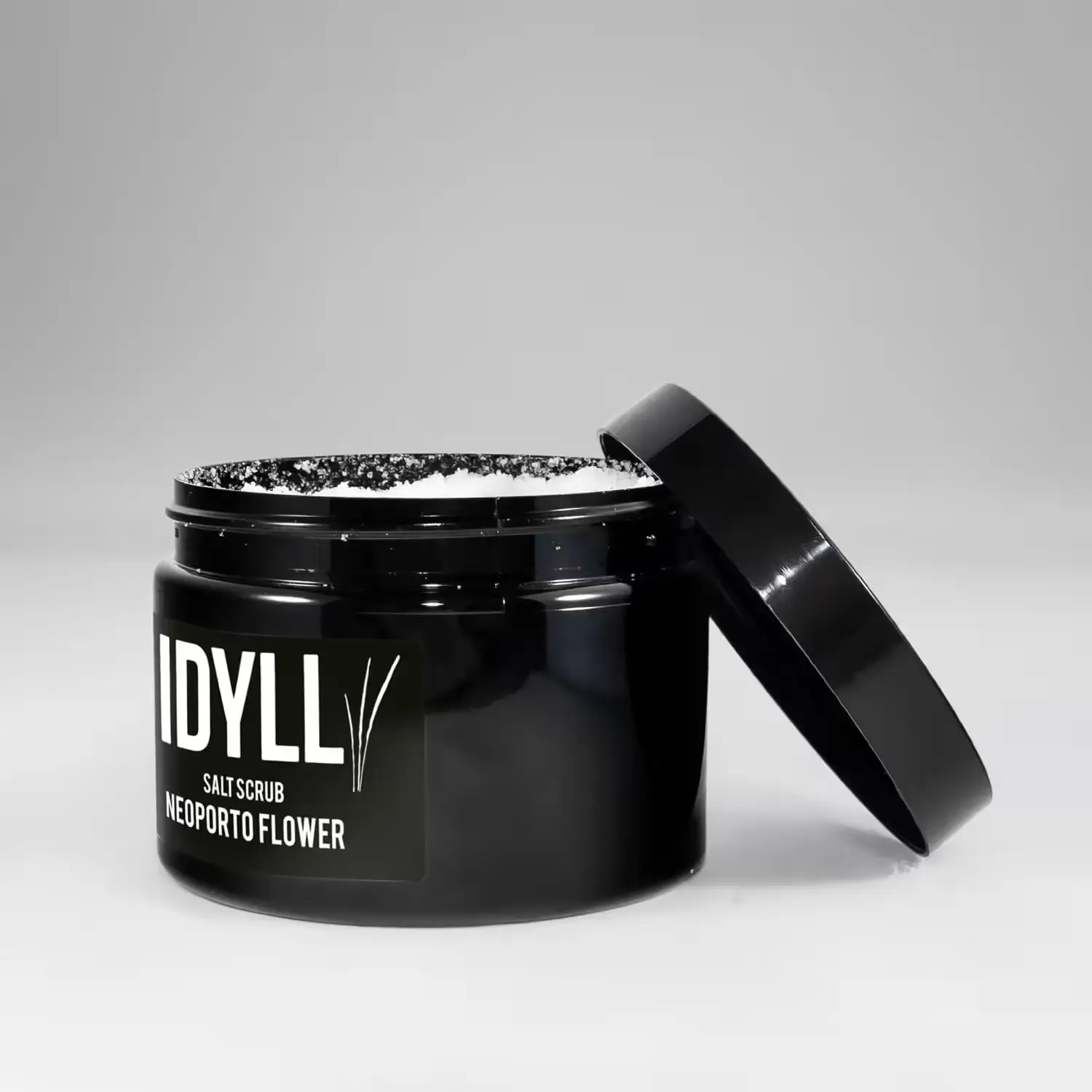
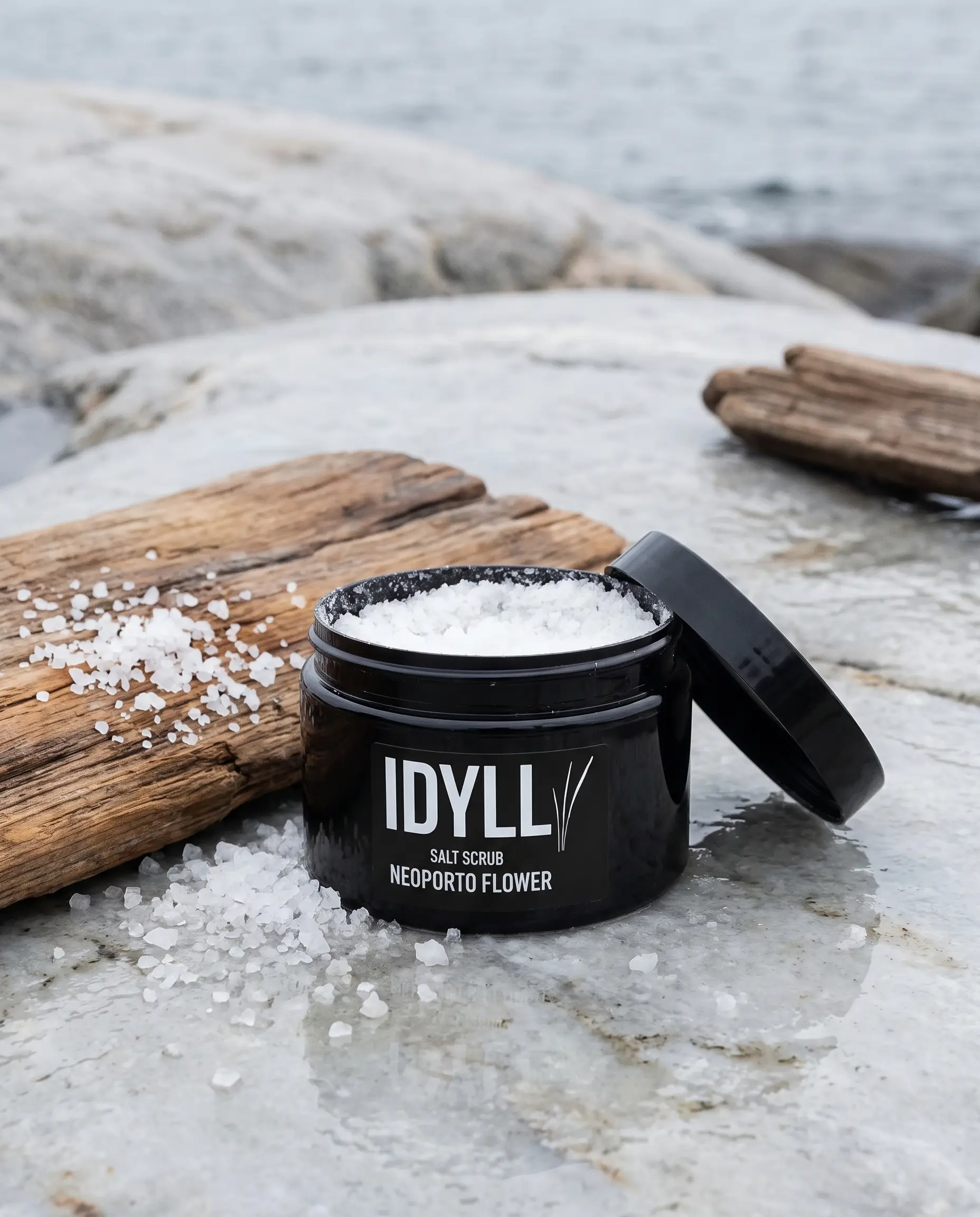
This is what a jar of salt scrub in Neoporto says:
Sodium chloride, Helianthus annuus (Sunflower) seed oil, Brassica campestris (Rape), Parfum (Fragrance), Tocopherol, Limonene, Linalool.
Read by the rules above: salt first, then sunflower and rapeseed oil as the carrier, then the fragrance, then vitamin E, and finally two fragrance components that must be declared. No preservative, because there is no water in the product — which is why the jar has to stay dry and the scrub is portioned with a wooden spoon.
The list differs slightly between the scents, but only at the end. Mintcalypto Energize has
Mentha piperita oil and Eucalyptus globulus leaf oil in its fragrance, Lemon Fields more
citrus components. The base is the same in all three.
It says nothing about crystal size, and crystal size is what decides how a scrub feels. Two products can have identical lists and still be differently abrasive. The jar tells you how much product you get, not how coarse the salt is — that difference you have to feel for yourself.
It also says nothing about what the product does to skin, and that is deliberate: the rules on cosmetic claims are strict about exactly that. An ingredient list is a declaration of what is in the jar. The rest is text around it.
“Natural”. The word is not regulated the way you might think. Parfum can be derived
naturally or synthetically and is called the same thing on the list.
“Paraben free”. A true statement, but it only says what isn’t in the product. What is in it is on the list, and the list is shorter to read than you would think.
Read next
Body
A sea salt body scrub that cleanses and remineralises the skin.
Sign up and hear about new fragrances and sets first.
New fragrances and offers by email. Unsubscribe in one click.