Body
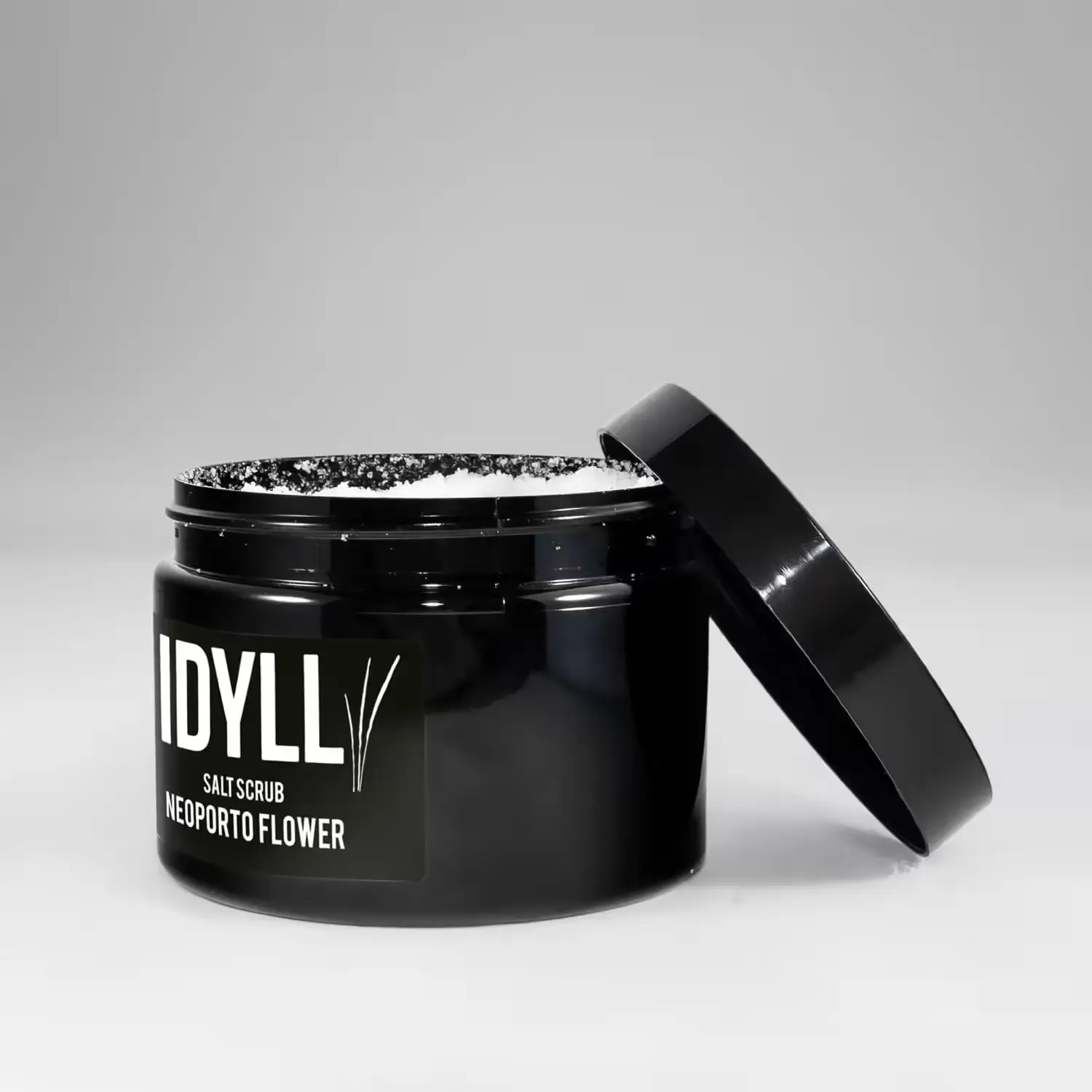
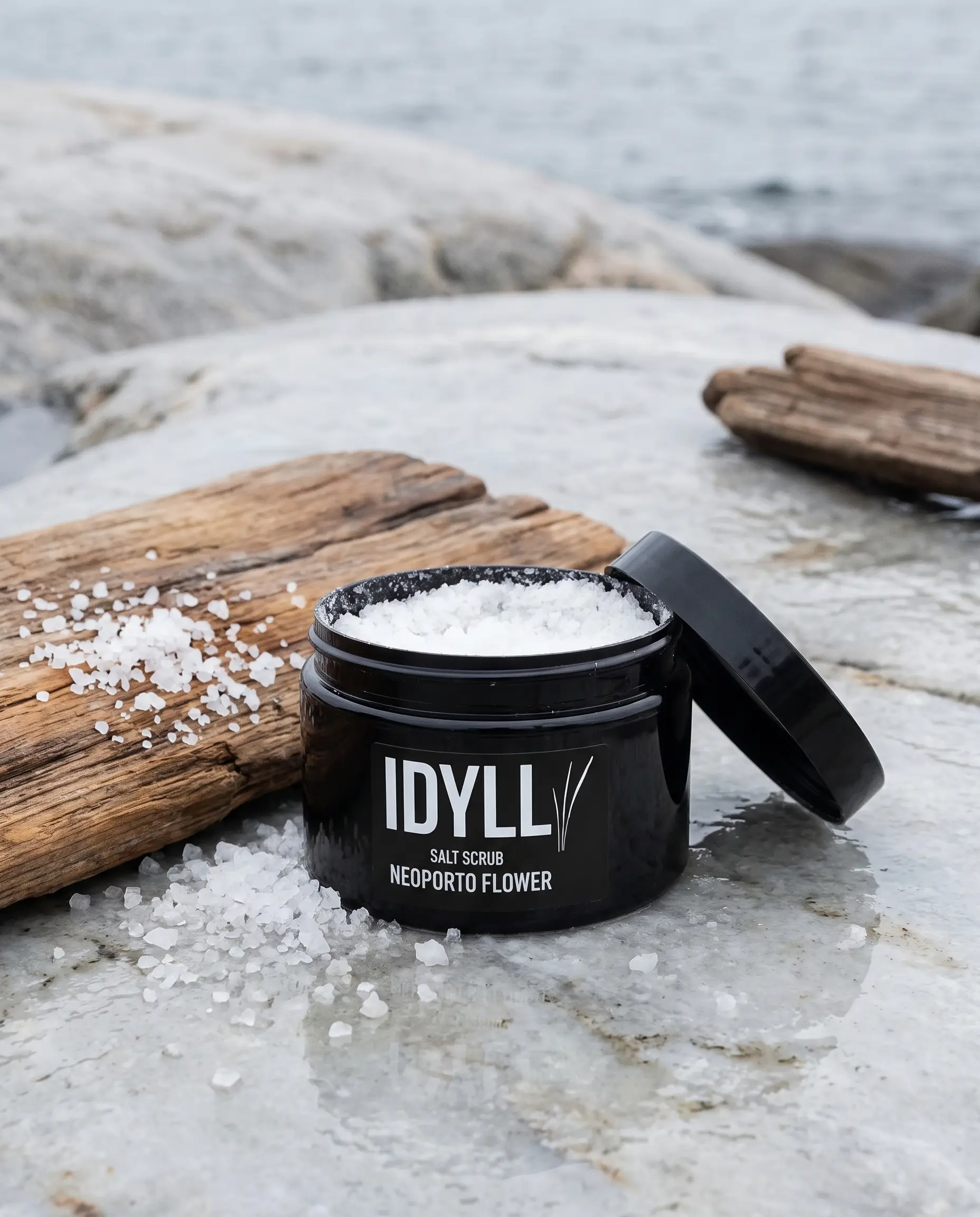
Salt Scrub
3 fragrances
20 reviewsA sea salt body scrub that cleanses and remineralises the skin.
325 kr
Choose fragranceSalt in a scrub is sodium chloride with edges. The edges do the work, and the crystal size decides how a scrub feels — more than the origin on the label does.
Updated 9 September 2026
Sodium chloride — sodium chloride. Sea salt is produced by evaporating sea water, which
leaves salt behind along with small amounts of other minerals depending on where the water came
from. Rock salt is the same thing, from seas that dried up a long time ago.
In a scrub the salt is the mechanical part. The crystals have edges, and as they travel across the skin, loose surface skin comes with them. That function is what you are buying.
Two scrubs can have identical ingredient lists and feel completely different. The difference is crystal size, and it is almost never printed on the packaging.
Salt also does not dissolve in oil, which means the crystal size you start with is the one you have throughout. A sugar scrub breaks down as you work — the difference between salt and sugar is, in practice, exactly that.
Three names that sell, and that mean different amounts.
Dead Sea salt has a different mineral composition from ordinary sea salt, with more magnesium. That is a real chemical difference. What it means for skin that is scrubbed for thirty seconds and rinsed off is another question, and nobody should answer it without evidence.
Himalayan salt is rock salt. The pink colour comes from iron oxide. As a scrub crystal it behaves like any other salt of the same size.
Epsom salt is not sodium chloride at all but magnesium sulphate, and it dissolves readily in water. Which is why it belongs in bath water rather than in an oil-based scrub.
Our salt scrub is sea salt in sunflower and rapeseed oil with vitamin E. The jar says so in full:
Sodium chloride, Helianthus annuus (Sunflower) seed oil, Brassica campestris (Rape), Parfum (Fragrance), Tocopherol, Limonene, Linalool.
What we say about the salt is what it does mechanically: the crystals lift away loose, dry skin. What we don’t say is that it detoxifies, cures or draws anything out of the body. Claims like that may not be made about a cosmetic product without evidence, and we have none.
Salt is hygroscopic — it attracts moisture. In an oil-based scrub that makes no difference as long as the jar is dry, and a great deal of difference as soon as it isn’t. Water carried down by a wet hand is the one common reason a scrub goes off early.
A wooden spoon and a jar kept outside the shower solve it. The oil settling on top and the salt below is normal: stir it, and it is as it was.
Read next
Body
A sea salt body scrub that cleanses and remineralises the skin.
Sign up and hear about new fragrances and sets first.
New fragrances and offers by email. Unsubscribe in one click.